Full Criminal Defense Content Marketing System [breakdown]
Your agency sends you reports showing traffic, rankings, and "engagement" from the content they produce.
But the calls aren't coming.
The cases aren't signing.
And you're left wondering if content marketing and SEO actually works for criminal defense.
It does, but only when it's built around what actually drives revenue.
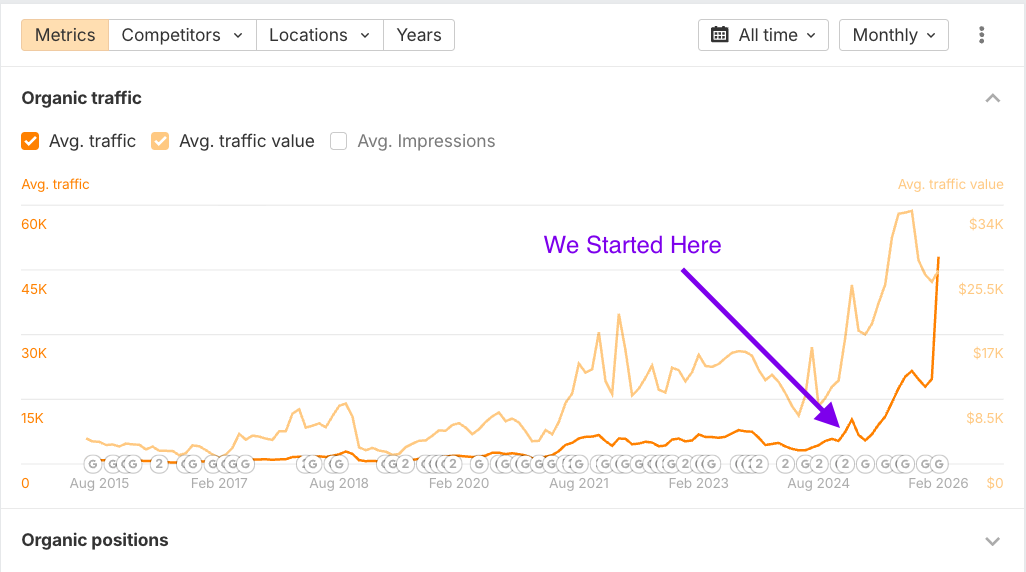
One of our clients went from nearly nothing to over $40,000 in monthly free traffic from Google. Another firm now receives $28,000 worth of organic traffic every month. Traffic they own, not rent through ads.
The difference wasn't luck.
It was this system.
Here's the exact content system we use to generate qualified leads and signed cases for criminal defense firms — and how you can apply it yourself. Watch the video below or continue reading.
The Problem: Most Legal Content Attracts the Wrong People
Before we get into the system, you need to understand why most criminal defense content fails.
The typical agency creates what they call "SEO content."
They target high-volume keywords. They write long articles stuffed with legal terminology. They report on rankings and traffic.
But none of it produces cases.
Why?
Because they're writing for the wrong audience.
They target top-of-funnel searches: people researching topics out of curiosity, students writing papers, or casual browsers who will never hire an attorney.
Examples:
"What does a criminal defense lawyer do?"
"The history of DWI laws in America"
"Criminal justice system overview"
These topics get eaten up by AI search results and deliver zero value to your practice. They attract traffic that will never convert.
What this means in practice: You pay for content that generates vanity metrics but produces no revenue. Your site looks busy. Your analytics show visitors. But your intake team isn't answering calls from people who actually need a lawyer.
The Solution: Middle-of-Funnel Content for People Ready to Hire
The content that actually produces signed cases targets a completely different audience.
Middle-of-funnel content speaks to people who have just caught a charge and need to understand their situation right now. They're on the edge of hiring. They need answers specific to their case type.
Examples:
"Simple assault vs aggravated assault: what's the difference?"
"First-time DUI penalties in [your state]"
"How does the court process work for drug possession charges?"
"What happens after you're arrested for domestic violence?"
These searchers aren't casually browsing. They have an active legal problem and need expert guidance immediately.
Where most firms go wrong: They chase high search volume instead of high intent. A topic with 10,000 monthly searches but zero hiring intent is worthless. A topic with 200 searches from people who just got arrested is gold.
Revenue impact: When you target middle-of-funnel topics, your content becomes a qualification tool. The wrong people filter themselves out. The right people — those with money, a genuine case, and urgency — move toward booking a consultation.
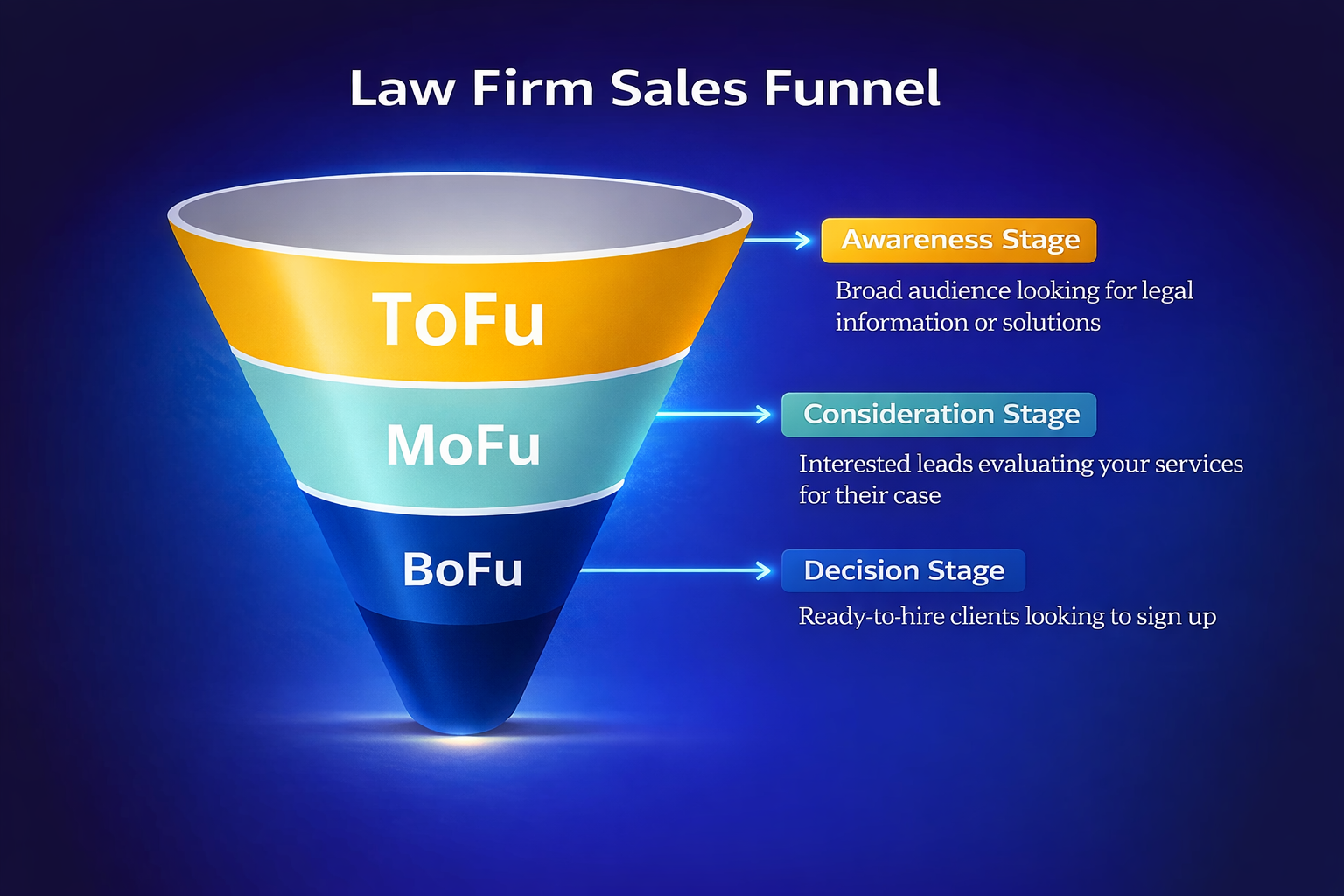
Criminal Defense Firm Sales Funnel
The Criminal Defense Content System: 6 Stages
Here's the exact system we use to produce content that ranks and converts.
Stage 1: Strategic Topic Selection
Start by identifying topics that people search right after they catch a charge.
Use Ahrefs and enter 3-5 of your top-performing competitors into the "Top Pages" report. Filter by traffic value (not just volume). This shows you which of their posts are driving the most valuable traffic.
Look for:
Charge-specific content (assault, DUI, drug possession)
Process-focused searches ("what happens if...", "how does...", "what to expect...")
Penalty and consequences queries
Topics with traffic value above $300/month
Real example: One of our clients discovered that "second DUI penalties" had lower search volume than generic "DUI information" content — but 10x higher conversion rates because only people facing actual charges searched for it.
Create a master list of 20-30 topics ranked by traffic value and conversion potential, not volume.
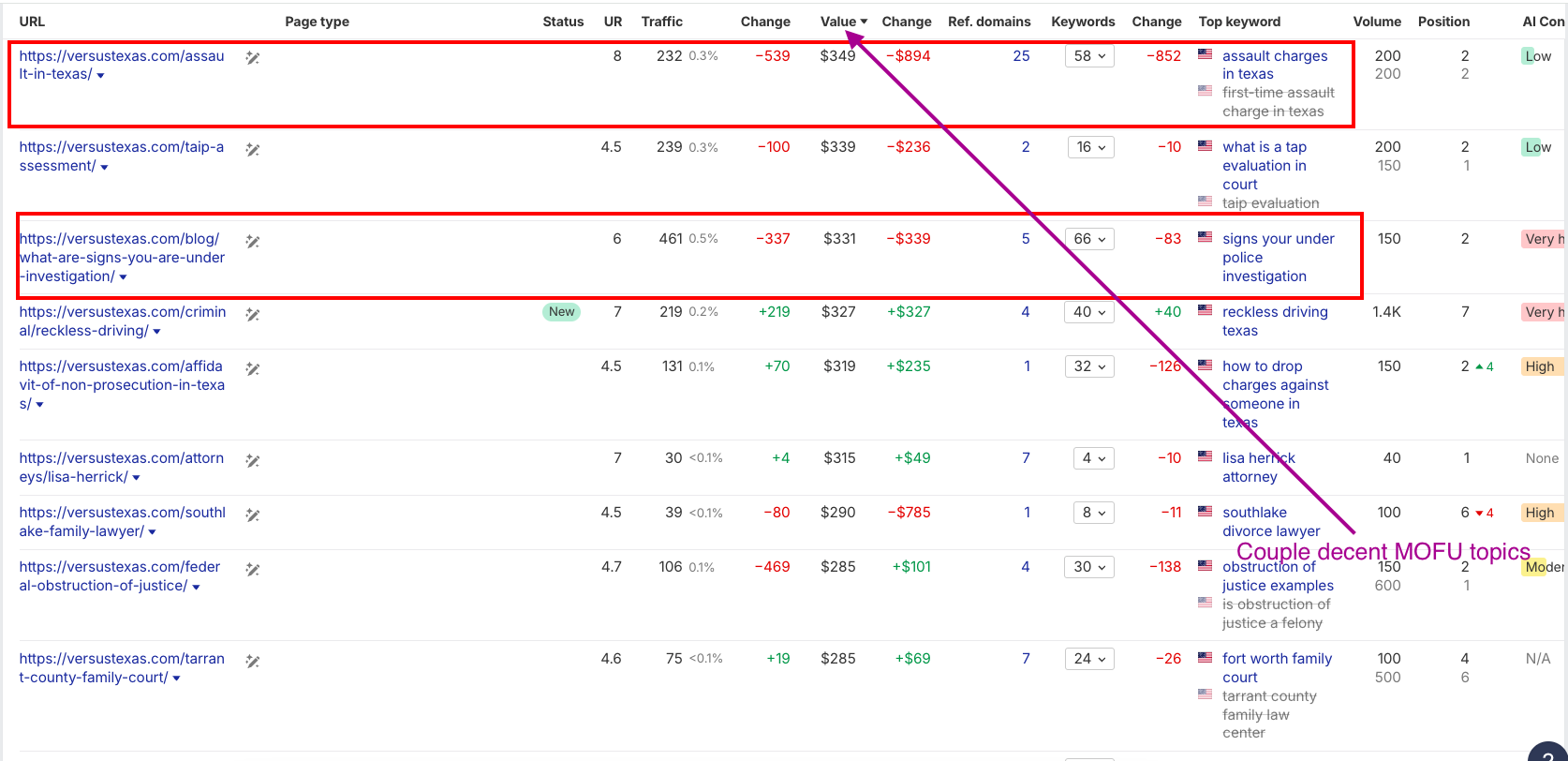
A couple of middle of the funnel topics that I found in 30 seconds
Stage 2: The Content Workbook System
We build a content workbook for each client. This is your central hub.
The workbook contains:
Your prioritized topic list
Competitor URLs currently ranking for each topic
A custom prompt template pre-loaded with competitor analysis
This ensures every piece of content we create is optimized around what's working right now — not what worked two years ago when some agency's "best practices" were written.
What this means in practice: Your content isn't guessing at structure or approach. It's built on real data from pages currently ranking #1-5 for your target search.
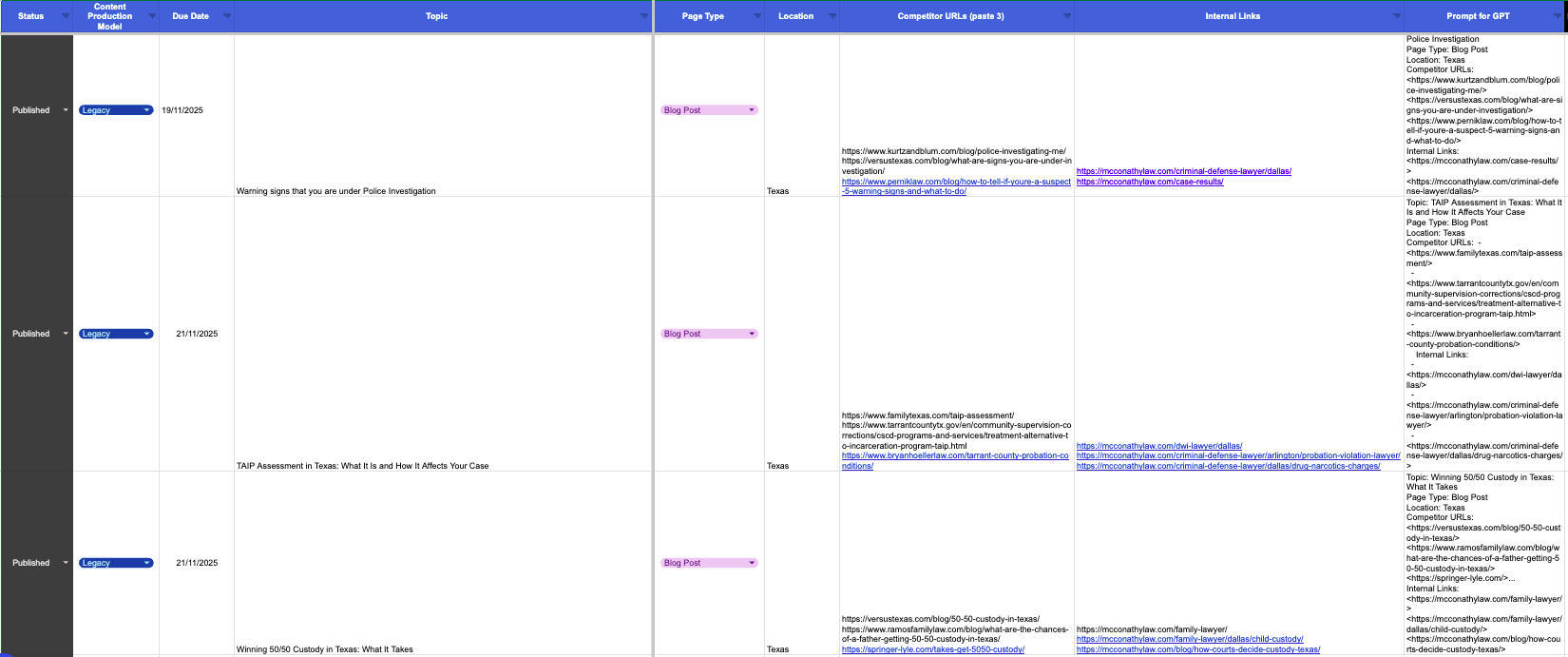
What our internal content workbook looks like
Stage 3: Content Brief Creation with Custom GPT
We take the content workbook and feed it into a custom-built GPT trained on hundreds of legal content briefs.
This isn't generic ChatGPT. It's a specialized interface trained on 5-10 years of agency experience creating content that ranks for criminal defense firms.
The GPT produces a detailed content brief that includes:
Search intent analysis
Optimal structure
Required sections
Internal linking strategy
Conversion points
Where most firms go wrong: They give AI a lazy prompt like "write me a blog post about DUI" and expect quality output. Without structure and guardrails, AI produces generic garbage that sounds like every other legal blog on the internet.
The content brief is your first guardrail. It ensures AI understands exactly what needs to be covered and why.
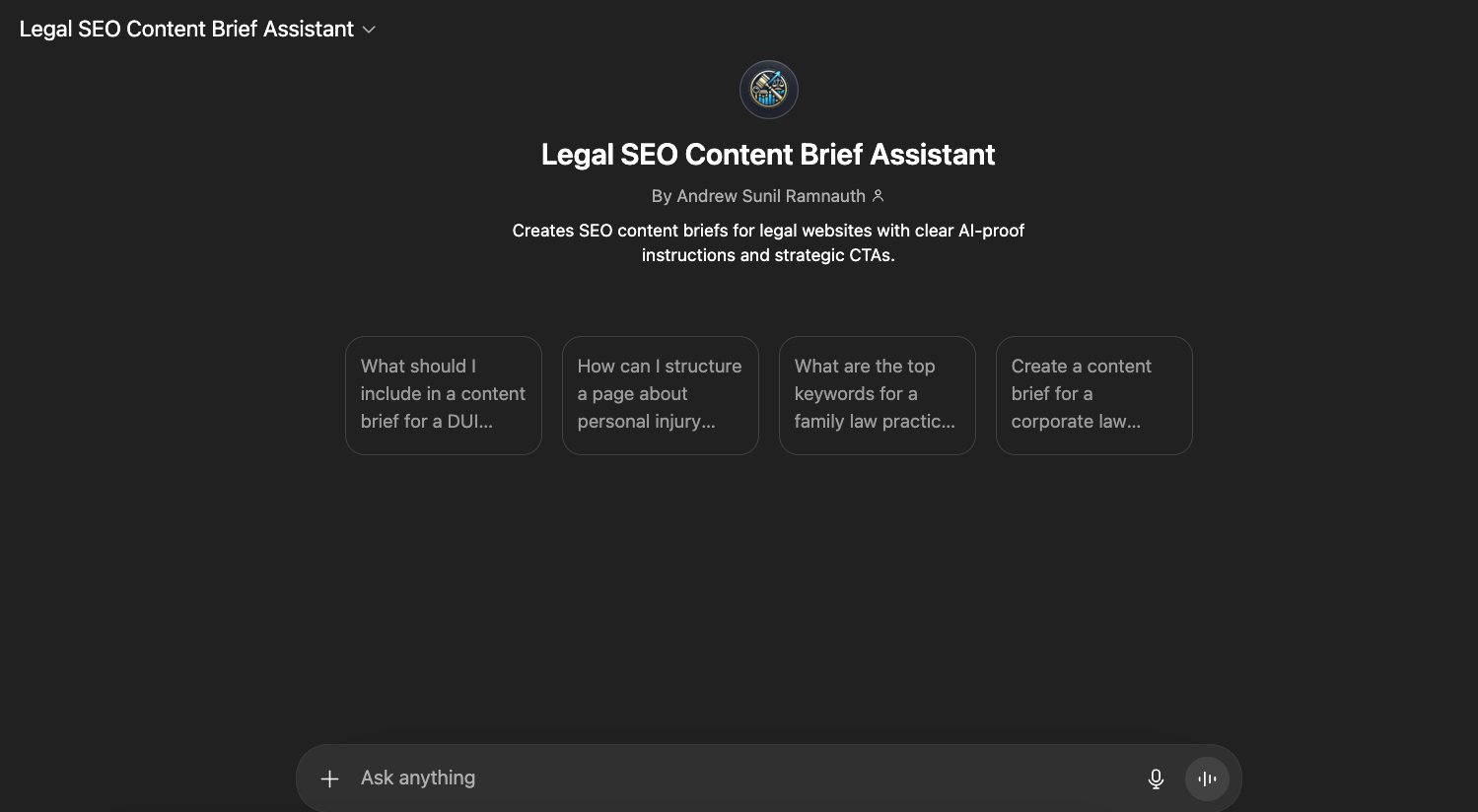
Custom GPT for legal SEO content briefs
Stage 4: Content Writing with Firm-Specific Claude Projects
We copy the content brief into Claude (which produces more natural-sounding writing than ChatGPT).
But here's the key: Every client gets their own Claude project pre-loaded with firm-specific information:
Your case results
Client testimonials
Your unique approaches to defending specific charges
Your positioning and philosophy
Practice area expertise
Before we write any content, we send clients a detailed survey to extract their unique thinking, case strategies, and insights that differentiate them from competitors.
This firm-specific information gets woven into every piece of content.
Strategic takeaway: This is how you beat bigger competitors. Generic legal content can be produced by anyone. Content that includes your specific case results, your approach to negotiations, and your track record in local courts cannot be replicated.
The more firm-specific information in your Claude project, the more differentiated your content becomes.
Stage 5: Human Quality Assurance (Non-Negotiable)
The AI draft is not publication-ready.
Every piece of content goes through human quality assurance with five specific optimization prompts. We don't use "mega prompts" — tight, focused prompts produce better results.
The QA process includes:
Fact-checking every legal claim
Verifying all case law references
Removing AI-sounding language patterns
Ensuring local jurisdiction accuracy
Optimizing for conversion
What this means in practice: Publishing raw AI content will destroy your credibility and expose you to liability. Criminal defense requires accuracy. One incorrect statement about penalties or court procedures damages trust permanently.
Our dedicated content person handles the entire process end-to-end: writing, fact-checking, optimizing, and uploading. They own quality.
Stage 6: Conversion-Optimized Publishing
Content gets uploaded to your site with:
Video embedded above the fold when available
Strategic calls-to-action placed throughout
Featured images and supporting visuals
High-quality internal links to practice area pages
External links to authoritative legal sources
Proper formatting for readability
Schema markup where appropriate
Every link is checked. No 404s. No broken references.
Real example: We embed client videos explaining their approach to specific charges directly in relevant content. When someone reads "How to Fight a First DUI," they see the attorney explaining their defense strategy on video. Conversion rates jump 40-60% compared to text-only posts.
The end result: Each post is a complete lead generation machine that attracts the right traffic and makes it easy for them to book a consultation.
The Information Gain Advantage: Why This System Beats Generic Legal Content
Here's what separates content that ranks from content that disappears:
Google doesn't reward you for saying the same thing as everyone else in slightly different words.
It rewards content that adds new information to what already exists in search results.
This concept is called "information gain" — and it's why our system works.
Most criminal defense content repeats the same surface-level information:
Generic explanations of charges
Boilerplate descriptions of the legal process
Recycled penalty ranges copied from state statutes
Our system adds information gain through:
Firm-specific case results: "In our last 50 DUI cases, 78% resulted in reduced charges or dismissal. Here's why..."
Local court insights: "In [County] District Court, judges typically focus on three factors when reviewing first-time assault charges..."
Real defense strategies: "When defending drug possession charges, we look for these five common procedural errors that prosecutors make..."
Client outcome examples: "One client came to us charged with aggravated assault. Here's how we got it reduced to simple assault and why that mattered..."
This information cannot be found anywhere else. It's unique to your practice. And it's exactly what someone facing charges wants to know.
Revenue impact: Content with strong information gain ranks higher, stays ranked longer, and converts better because it demonstrates genuine expertise instead of recycled knowledge.
What Most Firms Get Wrong About AI Content
The SEO industry is currently repeating the same mistake it makes every few years: trying to scale content through automation without maintaining quality.
It happened with content spinning in 2008. It happened with programmatic SEO in 2015. And it's happening now with AI-generated content.
Here's what fails every time:
Agencies promise to produce 50, 100, or 500 blog posts per month using AI. They claim volume will overwhelm Google's ability to assess quality.
It doesn't work. It has never worked.
Google doesn't evaluate content in isolation. It evaluates content relative to everything else already in the index.
Publishing 500 AI-generated posts about DUI doesn't make you an authority. It makes you the 500th source saying the same thing in slightly different words.
The qualitative wall: There's a minimum threshold of genuine value — original insight, lived experience, specific expertise — below which no amount of volume helps you.
Google's spam policies explicitly define using generative AI tools to generate many pages without adding value for users as scaled content abuse.
In June 2025, Google began issuing manual actions targeting sites mass-publishing AI content. Complete visibility drops. Pages vanished overnight.
Where most firms go wrong: They publish unreviewed AI content at scale under their brand name. They skip fact-checking. They skip editorial oversight. They skip the human curation that makes content valuable.
When Google catches up (and it always does), the penalty hits your entire site — not just the bad pages.
Real Results: What This System Produces
McConathy Law
Achieved $40,000/month in traffic value, going from 30 signed cases per month to over 85. We used content targeting middle-of-funnel searches for assault, DUI, and drug charges.
Lorfing Law
Grew from minimal presence to $28,000/month in organic traffic.
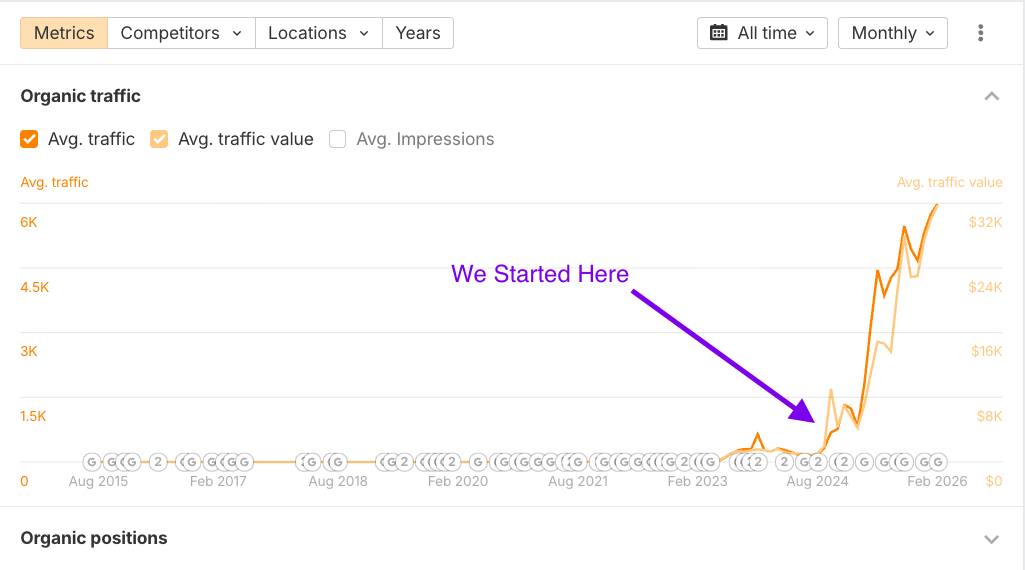
Both firms own this traffic. They're not renting it through ads.
And they're not at risk of losing it to an algorithm update because the content is high-quality, human-reviewed, and packed with genuine expertise.
What this means in practice: When someone in your area searches "what happens after first DUI arrest," your content ranks. When they search "can I beat a drug possession charge," your content ranks. When they search "assault lawyer near me," your practice shows up because you've built authority through valuable content.
That traffic converts because it's targeting people who need a lawyer right now.
Your Next Step
You have two options.
Run this system yourself using the framework I've outlined. You'll need the tools, the time, and someone who understands criminal defense content strategy.
Or work with us to implement the complete system for your firm.
Either way, stop paying for content that produces vanity metrics instead of signed cases.
Book a call to discuss which approach fits your firm →
The firms winning in organic search aren't publishing more content. They're publishing better content that targets the right searches and converts the right people.
That's the system.
Frequently Asked Questions
-
Criminal defense content typically begins ranking within 45-60 days of publication. Consistent lead flow usually develops within 3-6 months as your site builds topical authority in Google. The criminal defense firms generating $40,000+ in monthly organic traffic built those results over 8-12 months of consistent publishing. Unlike paid advertising, organic traffic compounds over time — early rankings strengthen and expand to related searches as your authority grows.
-
Criminal defense firms should publish 4-8 high-quality, middle-of-funnel articles per month focused on charge-specific content. One well-researched post targeting "what happens after a first DUI arrest" will generate more signed cases than 20 generic articles about "understanding DUI laws." Publishing frequency matters less than targeting the right search intent with firm-specific expertise and local jurisdiction information.
-
AI-generated content works for law firm SEO only when it includes firm-specific information, is fact-checked by legal professionals, and adds unique insights not found in competing search results. Google explicitly penalizes mass-produced AI content that simply rewords existing information. Criminal defense content must be human-reviewed for legal accuracy and include original elements like case results, local court procedures, and defense strategies to rank successfully.
-
Criminal defense blogs should target middle-of-funnel topics that people search immediately after arrest: charge-specific penalties, differences between charge levels (simple vs aggravated assault), court process explanations for specific charges, and consequences of various criminal charges. Avoid top-of-funnel topics like "what does a criminal defense lawyer do" or "history of criminal law" — these attract researchers, not potential clients facing actual charges.
-
ChatGPT alone cannot write effective criminal defense content without significant customization and human oversight. Generic ChatGPT output produces the same information found on hundreds of other legal websites. Effective criminal defense content requires firm-specific case results, local court insights, jurisdiction-specific procedures, and unique defense strategies that only human attorneys can provide. Raw AI output must be enhanced with original information and fact-checked for legal accuracy before publication.
